How Long Does a Bathroom Remodel Take? A Realistic Timeline for Eastern Shore Homeowners
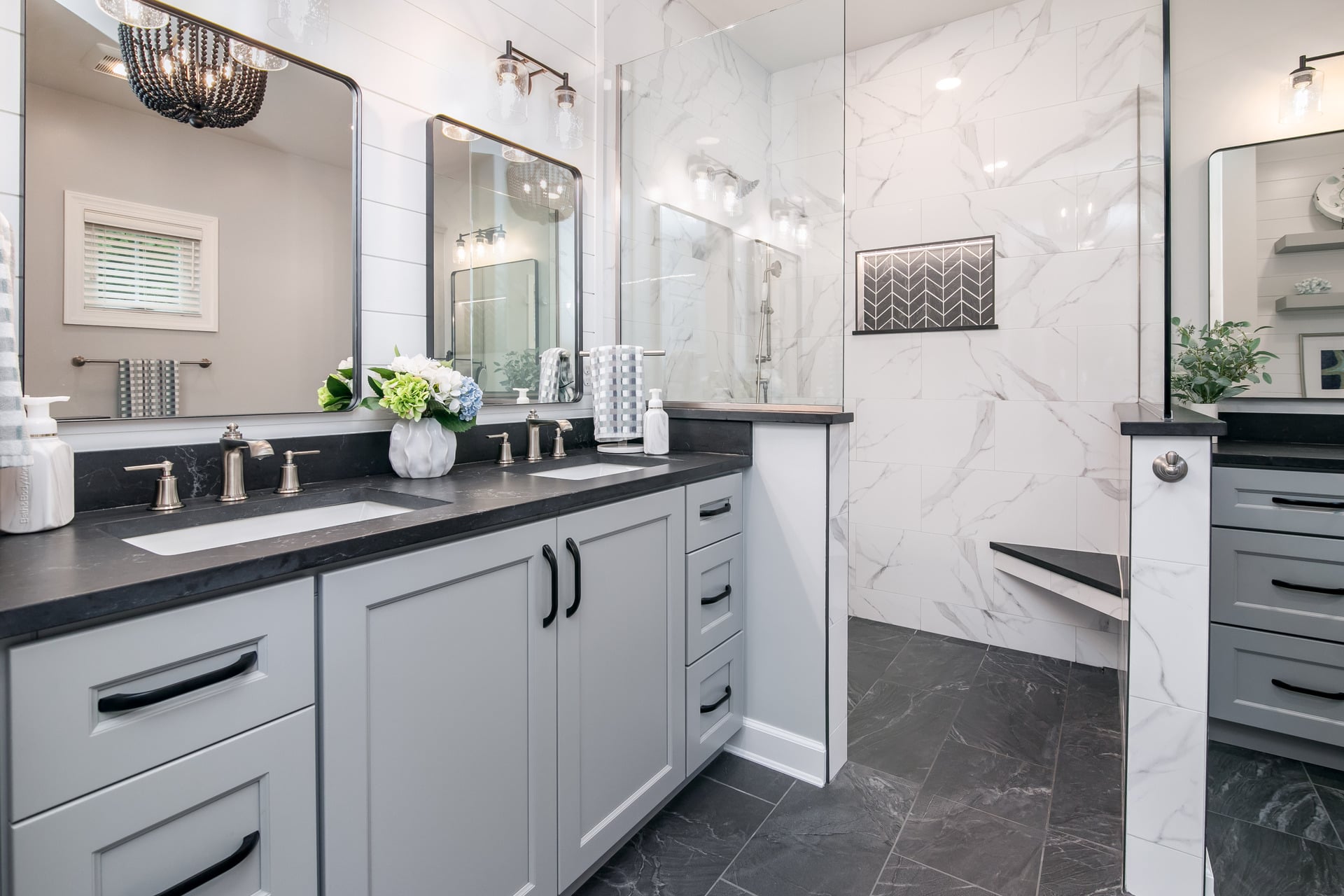
If you’re planning a bathroom remodel, one of the first questions you’re probably asking is: how long is this going to take? The answer depends on the scope of work, but most bathroom remodels take anywhere from 3 to 12 weeks from the first design conversation to the final walkthrough.
For homeowners near Maryland’s Eastern Shore, that timeline can be shaped by a few additional factors: local permitting requirements, HOA approvals, seasonal construction restrictions near resort areas, and the reality of coordinating trades in a region where contractors are in high demand.
This article walks through every bathroom remodel phase so you know exactly what to expect.
Planning a kitchen remodel too? Check out our kitchen remodel timeline guide for a side-by-side comparison.
How Long Does a Bathroom Remodel Take?
Most bathroom remodels take between 3 and 12 weeks, depending on scope.
A simple cosmetic refresh (e.g., new fixtures, fresh tile, updated vanity) can wrap up in a few weeks. A full gut remodel with structural changes, custom tile work, and new plumbing can take two to three months or more.
Here’s a general breakdown by project type.
|
Project Type |
Scope |
Typical Timeline |
Notes |
|
Cosmetic Update |
New fixtures, paint, vanity swap |
2-4 weeks |
No structural changes |
|
Mid-range Remodel |
New tile, shower, full vanity, lighting |
5-8 weeks |
Plumbing & electrical work involved |
|
Full Gut Remodel |
Complete teardown and rebuild |
8-12 weeks |
Structural changes possible |
|
High-end Custom |
Custom tile, steam shower, radiant heat, luxury finishes |
10-16 weeks |
Longer lead times on materials |
These are general benchmarks. Your actual timeline will depend on decisions made early in the planning process, and how quickly you make them.
What Are the Phases of a Bathroom Remodel?
A bathroom remodel moves through five main phases: planning and design, demolition, rough-in work, installation, and finishing. Each phase has its own timeline, so delays in one phase can ripple into the next.
Phase 1: Planning & Design (2-6 Weeks)
This phase often takes longer than homeowners expect, but it’s worth it. The more decisions you make upfront, the smoother the rest of the process goes and the happier you’ll be with the result.
This is an overview of what happens during bathroom remodel planning and design:
- Initial consultation and site assessment
- Design selections: tile, fixtures, vanity, shower type, lighting
- Permit applications (where required)
- Material ordering (especially important for custom and special-order items)
Pro tip: Lead times on tile, custom vanities, and specialty fixtures can run 4-8 weeks. Ordering materials before the demo begins is best to keep your project on schedule.
Phase 2: Demolition (1-3 Days)
Demo moves fast — usually 1 to 3 days for a standard bathroom. Crews remove existing tile, fixtures, vanity, flooring, and sometimes drywall. If mold, water damage, or outdated plumbing is discovered behind the walls, expect a brief pause to address it before moving forward.
| Discovery Work: Unexpected repairs uncovered during demolition, such as mold remediation, rotted subfloor, or outdated galvanized pipes that must be addressed before the remodel continues. This is one of the most common sources of timeline and budget adjustments. |
Phase 3: Rough-In Work — Plumbing & Electrical (3-7 Days)
Before any tile goes up or fixtures go in, your plumber and electrician work behind the wall. This phase includes:
- Relocating or adding supply and drain lines
- Installing new electrical circuits for GFCI outlets, lighting or heated floors
- Framing changes for niche shelves, expanded shower footprints, or accessibility modifications
- Inspections: Most jurisdictions require rough-in inspections before walls are closed. Schedule delays here are common — plan for 2 to 5 business days for an inspector to be available.
Phase 4: Tile Installation & Waterproofing (5-10 Days)
Tile installation is one of the most time-consuming phases. Waterproofing membranes must cure before tile is set, and large-format tile or intricate patterns take longer to lay precisely.
- Waterproofing membrane application and cure time: 24-48 hours
- Tile setting and grouting (floors, shower walls, backsplashes)
- Grout curing: Another 24-72 hours before the shower can be used
Phase 5: Fixture Installation & Finish Work (3-7 Days)
The home stretch! And the most visually satisfying phase. This is when your bathroom starts looking like the design you chose.
- Vanity and countertop installation
- Toilet, shower fixtures, and faucets
- Mirrors, lighting towel bars, and accessories
- Touch-up paint and final punch-list walk-through
|
Phase |
Duration |
Key Milestone |
|
Planning & Design |
2-6 weeks |
Permits pulled, materials ordered |
|
Demolition |
1-3 days |
Existing bathroom cleared |
|
Plumbing & Electrical |
3-7 days |
Rough-in inspection passed |
|
Tile & Waterproofing |
5-10 days |
Tile set, grout cured |
|
Fixture & Finish Install |
3-7 days |
Final walk-through complete |
Ready to start planning? Schedule a free design consultation with our team.
How Does Scope Affect the Bathroom Remodel Timeline?
Scope is the single biggest driver of timeline. Two homeowners with similar-sized bathrooms can have wildly different project lengths based on what they’re changing.
Here’s what tends to add time:
- Moving plumbing: Relocating a toilet or moving a shower drain requires opening floors or walls, adding several days and often a required inspection.
- Structural changes: Removing a wall, adjusting ceiling height, or expanding a shower footprint adds framing time and may require additional permits.
- Custom tile work: Herringbone patterns, large-format tiles, or decorative mosaic accents take significantly longer than standard subway tile.
- Accessibility modifications: Walk-in showers, grab bar blocking, widened doorways, and curbless shower entries (common in aging-in-place projects) require careful planning and may add to rough-in time.
- Special-order materials: Lead times for custom vanities, imported tile, or specialty fixtures can push your start date back if not ordered early.
What tends to keep timelines shorter:
- Working within the existing plumbing footprint
- Standard-size tile in stock patterns
- Pre-fabricated vanity vs. custom cabinetry
- No structural changes to walls or ceilings
What Makes Bathroom Remodel Timelines Different on Maryland’s Eastern Shore?
On or near Maryland’s Eastern Shore, your bathroom remodel timeline is shaped by local permitting requirements, seasonal construction restrictions in resort towns, HOA rules in condo communities, and the regional climate.
If you’re planning a remodel in Salisbury, Ocean City, Berlin, St. Michaels, or anywhere along the Delmarva Peninsula, here’s what to factor in.
Permitting on the Eastern Shore
Bathroom remodels that involve plumbing, electrical, or structural changes typically require permits, and each county and municipality moves at its own pace.
|
Jurisdiction |
Typical Permit Timeline |
|
Wicomico County / Salisbury |
1-3 weeks |
|
Worcester County |
2-4 weeks |
|
Ocean City (municipal) |
2-5 weeks |
|
Kent / Queen Anne’s County |
1-3 weeks |
|
Caroline / Dorchester County |
1-2 weeks |
Scheduling inspections after rough-in work is complete can add another 3-7 business days. Working with a design-build firm that handles permitting on your behalf can remove a big administrative burden and help avoid scheduling gaps.
Resort Area Seasonal Restrictions
If your property is in a resort community — particularly Ocean City or the surrounding areas — construction during the peak summer season (Memorial Day through Labor Day) is often restricted or heavily regulated.
Municipal codes and HOA rules in these areas frequently limit noisy work to certain hours, restrict contractor vehicle access, or prohibit certain types of construction entirely during high-traffic periods.
What this means:
- Projects in resort areas are often best planned for fall or winter
- October through March tends to offer the most scheduling flexibility
- Contractors familiar with the area will often schedule larger projects to wrap before or after the summer lockdown
- If your project runs into May or June, delays are more likely
According to Ocean City’s building and zoning regulations, construction activity near residential and resort zones is subject to noise ordinances and seasonal permitting windows. Always verify current restrictions with your contractor before setting a start date.
HOA Approvals for Condo Remodels
Condo and townhome owners on the Eastern Shore — particularly in Ocean City and resort communities — often face an additional approval layer: the HOA. HOA boards typically review remodel plans to ensure they don’t affect common areas, structural systems, or neighboring units.
Common HOA requirements that affect timelines:
- Written approval before any work begins (can take 2-6 weeks)
- Sound-mitigating underlayment: Many HOAs require acoustic underlayment beneath tile or LVP flooring in stacked condo units to reduce sound transfer between floors. This adds a step during installation.
- Restricted contractor hours (often 8 a.m. to 5 p.m., no weekends in some buildings)
- Certificate of insurance requirements for contractors
- Move-in/move-out procedures for material delivery
| Sound-Mitigating Underlayment: A layer of acoustic-dampening material installed beneath hard flooring (tile, LVP) in condo units to reduce impact and airborne sound transmission to units below. Often required by HOA rules or local building codes in multi-family buildings. |
Plan for at least 4 to 6 additional weeks if your condo project requires HOA approval. Starting the process before your contractor is ready to begin can keep the overall timeline on track.
Eastern Shore Climate and Material Considerations
Maryland’s Eastern Shore is a humid, coastal environment, and that directly impacts material selection and even installation timing. High humidity levels can affect tile adhesive cure times, cause issues with moisture-sensitive materials, and accelerate wear on the wrong finishes.
These are materials that hold up well in Eastern Shore bathrooms:
- Porcelain and ceramic tile: Non-porous, moisture-resistant, and durable for high-humidity spaces
- Solid surface or quartz countertops: Resist warping and staining better than natural stone in humid environments
- PVC or moisture-resistant MDF cabinetry: Standard wood cabinetry can swell and warp in coastal bathrooms
- Mold-resistant drywall (cement board): Required in wet areas, especially in older homes from the 1980s and 1990s that may have standard drywall behind existing tile
For vacation homes that are vacant for extended periods, consider:
- Ventilation upgrades to manage humidity when the home is unoccupied
- Finishes and fixtures rated for high-moisture environments
- Timing your project for shoulder season when you have easier access to the property
Remodeling a vacation home or condo on the Eastern Shore? Our team knows the local rules — and how to work around them. Contact us.
What Causes Bathroom Remodel Delays, and How Can You Avoid Them?
The most common causes of bathroom remodel delays are late material deliveries, slow decision-making, inspection scheduling backlogs, and discovery work uncovered during demo. Most of these are preventable with early planning.
|
Common Delay |
Why It Happens |
How to Avoid It |
|
Material back-orders |
Tile, vanities, and fixtures have long lead times |
Order materials before demo begins |
|
Inspection delays |
Inspectors have limited availability |
Schedule inspections as soon as rough-in is complete |
|
Design indecision |
Later changes trigger rework |
Finalize all selections before construction starts |
|
Discovery work |
Mold, water damage, or outdated plumbing found during demo |
Budget a 10-15% contingency for unexpected repairs |
|
HOA approval delays |
Review processes take weeks |
Submit HOA application at the same time as permit applications |
|
Contractor availability |
Busy season demand |
Book 2-3 months in advance for spring/summer projects |
How Long Will I Be Without My Bathroom During a Remodel?
For a full gut remodel, plan to be without the bathroom for at least 4 to 8 weeks.
If it’s your only bathroom, that’s a big consideration and something worth discussing with your contractor before signing a contract.
A few things that help:
- Schedule demo and rough-in to move quickly (these phases don’t require a livable space)
- Ask your contractor about sequencing work to restore running water as fast as possible
- Consider timing the project during a planned vacation or travel period
- If you have a second bathroom, even a half bath, that simplifies things considerably
According to the National Kitchen and Bath Association (NKBA), homeowners who plan their primary bathroom remodel during a period when they have access to another bathroom report significantly less stress throughout the project.
Frequently Asked Questions About Bathroom Remodel Timelines
Do I need a permit to remodel a bathroom in Maryland?
Yes, in most cases. Any remodel involving plumbing changes, electrical work, or structural modifications requires a building permit in Maryland. The specific requirements vary by county and municipality.
Your contractor should handle permit applications, but plan for 1 to 4 weeks for approval depending on your jurisdiction.
Can I remodel a bathroom in Ocean City during summer?
It’s possible, but challenging. Ocean City has strict noise ordinances and seasonal restrictions that can limit construction activity between Memorial Day and Labor Day. Most experienced contractors in the area recommend scheduling major remodels for fall or winter to avoid delays and access issues.
How far in advance should I plan a bathroom remodel?
For a mid-range to full remodel, start planning at least 3 to 4 months before your desired start date. This gives you time for design consultations, material selection, permitting, and contractor scheduling.
On the Eastern Shore, where contractor availability tightens in spring, booking earlier is always better.
Does a condo HOA have to approve a bathroom remodel?
Usually yes, especially if the work involves plumbing, electrical, or flooring changes that could affect neighboring units. Most HOA boards require written approval before work begins. Budget 2 to 6 weeks for the review process and make sure your contractor carries the required insurance.
What’s the most time-consuming part of a bathroom remodel?
Tile installation tends to be the most time-consuming phase of construction, especially for custom patterns or large-format tiles. But the planning phase (design selections, permitting, and material ordering) often takes longer than any construction phase. Starting that process early is what keeps the overall timeline on track.
Ready to Remodel? We’re Here Every Step of the Way
Kitchen Concepts Plus is a design-build firm based in Salisbury, MD, serving homeowners across the Delmarva Peninsula. Contact our team to start planning your bathroom remodel. We use our proven process to handle every step from design through installation.